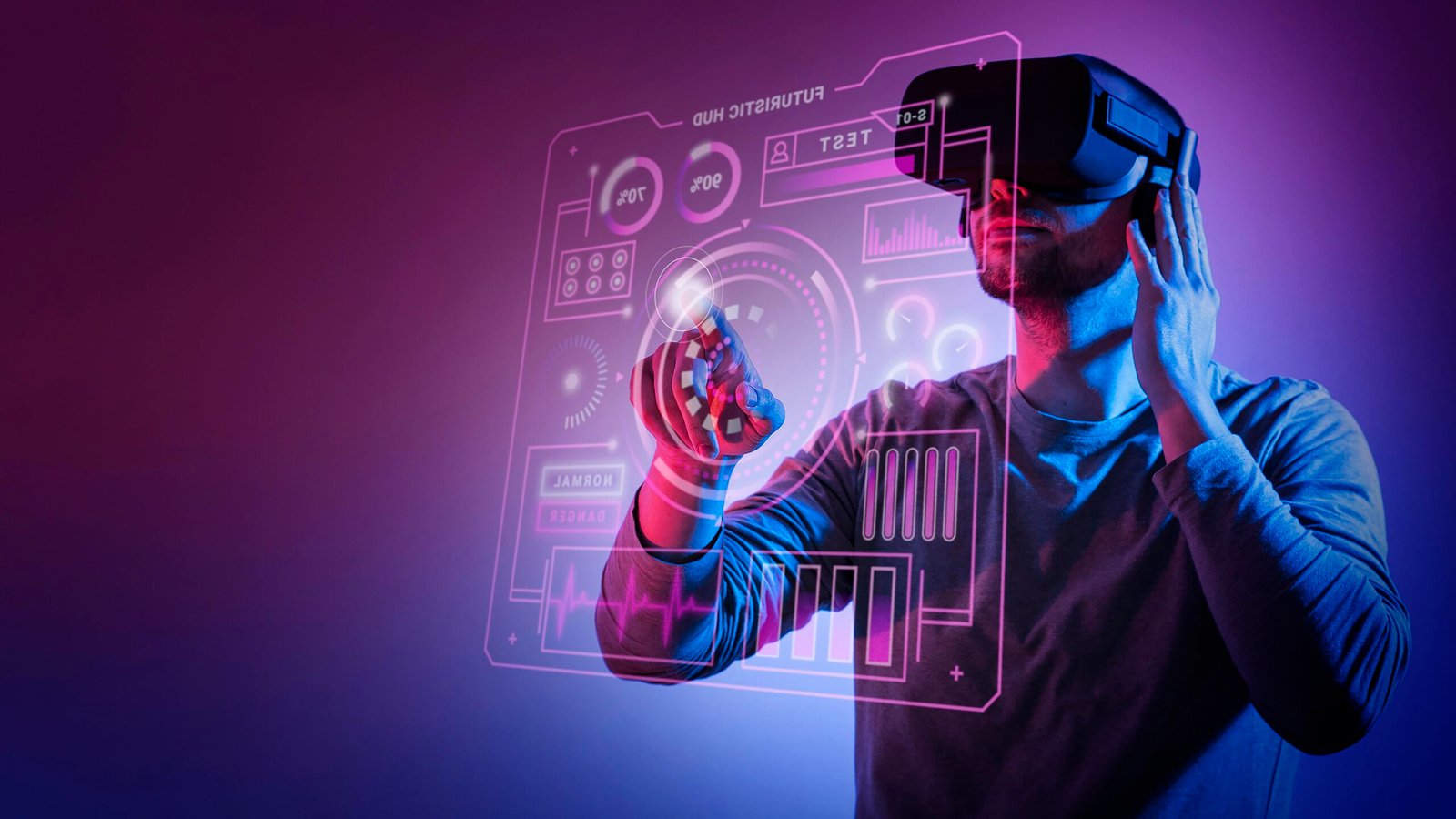
Augmented Reality (AR) has evolved significantly over the years, becoming a crucial tool in various industries, from gaming to education. Ark augmented reality represents the next phase in this technology, ushering in a new era of immersive digital experiences. As the lines between the physical and virtual worlds blur, ark augmented reality stands at the forefront of this transformation. This technology takes AR to the next level by enhancing how we interact with digital elements, bringing virtual worlds into real-world environments in real-time. While many consumers are familiar with basic AR through smartphone applications and games, ark augmented reality offers a deeper, more interactive layer. This guide will explore what ark augmented reality is, how it works, and its applications in industries such as gaming, healthcare, and education. We will also look into how scene understanding, mixed reality, and AI contribute to making this immersive technology more effective and engaging.
Ark Augmented Reality: What It Is and How It Works
Ark augmented reality, often referred to as AR technology, is a step beyond traditional AR. Unlike basic AR, which overlays digital elements onto the real world through devices like smartphones or tablets, ark augmented reality focuses on integrating digital content into real-world environments with advanced scene understanding. By using AI, it can interact with the environment in ways that basic AR cannot, allowing for more natural, responsive experiences.
The core of ark augmented reality is its ability to understand the physical world around it. This understanding is achieved through advanced algorithms that process visual and spatial data, enabling digital elements to adapt to their surroundings. For instance, an AR system using ark technology can recognize a room’s layout and adjust virtual objects to interact seamlessly with furniture and walls. This creates a more natural, immersive experience that goes beyond simple digital overlays.
As AR technology progresses, ark augmented reality is also benefiting from advancements in AI and machine learning, which enhance its ability to understand and predict real-world interactions. These improvements help bridge the gap between virtual and physical spaces, creating a more cohesive interaction. For example, an AI-powered AR system can generate a scene, predict how objects will move, and adjust the environment accordingly, all while maintaining a realistic user experience.
Augmented Reality Innovation: Key Developments in AR Technology
The AR industry has seen significant innovation in recent years, and ark augmented reality is leading the charge. One of the most notable developments in augmented reality innovation is the integration of AI, which allows for more intelligent and adaptive interactions. In traditional AR, users interact with pre-programmed content that doesn’t change based on environmental factors. However, with ark augmented reality, digital elements can respond dynamically to the environment, allowing for more engaging and realistic interactions.
Another major innovation is the development of AR systems that are more efficient and accessible. Historically, AR required expensive hardware such as smart glasses or headsets. Today, however, mobile devices and even low-cost wearables can support augmented reality experiences powered by ark technology. This accessibility has led to the widespread adoption of AR across various sectors, including gaming, retail, and education.
The future of immersive technologies, such as AR, is poised to be even more transformative. As the metaverse gains traction and more industries explore AR’s potential, ark augmented reality is becoming an integral part of this digital evolution. By incorporating knowledge inference, real-time data processing, and interaction with both physical and virtual worlds, ark augmented reality is pushing the boundaries of what AR can achieve.
The Future of Immersive Tech: Ark Augmented Reality’s Potential
As we look ahead to the future of immersive tech, ark augmented reality is set to become a key player in various industries. In the gaming world, for example, it promises to revolutionize how players interact with virtual environments. By blending the digital and real worlds, ark augmented reality allows for more engaging and interactive gameplay. Players will be able to physically interact with digital objects, creating a sense of presence and immersion that is unparalleled.
In industries like healthcare, ark augmented reality is already making strides. Medical professionals are using AR to enhance their understanding of complex procedures, and patients are benefiting from interactive treatments that help them better understand their conditions. Ark augmented reality enhances these experiences by providing real-time data and contextual information, making it easier for healthcare providers to make informed decisions.
As immersive technology continues to develop, ark augmented reality will play an essential role in shaping how we interact with the world around us. Whether in virtual environments or real-world applications, the ability to blend physical and digital spaces seamlessly will create new opportunities for both consumers and businesses.
Using Ark Augmented Reality in Real-World Applications
One of the most exciting aspects of ark augmented reality is its potential for real-world applications. Industries are quickly realizing the value of incorporating AR into their operations to improve efficiency, enhance user experiences, and increase engagement. For instance, in the retail sector, ark augmented reality allows customers to virtually try on clothes or visualize furniture in their homes before making a purchase. This technology makes shopping more interactive and helps consumers make more informed decisions.
In the manufacturing sector, AR is being used to assist workers with complex assembly tasks. With AR headsets or smart glasses, employees can receive step-by-step instructions overlaid on their field of view, improving accuracy and reducing errors. Ark augmented reality enhances this experience by ensuring that the digital content interacts naturally with the physical environment, making it more intuitive and helpful for users. The ability to bring digital elements into the real world also has significant implications for industries such as architecture and design. With AR, architects and designers can visualize their projects in real time, making adjustments and improvements before construction begins. Ark augmented reality allows for a more immersive experience by ensuring that the digital elements align with the physical environment, providing a clearer understanding of how the final product will look.
The Role of Scene Understanding in Ark Augmented Reality
Scene understanding is one of the key factors that differentiate ark augmented reality from traditional AR. This technology enables AR systems to recognize and interpret the physical world around them, allowing digital content to interact with the environment in a meaningful way. Through scene generation, ark augmented reality can simulate how digital objects will appear in real-world settings, adjusting their placement, size, and appearance to match the environment.
For example, in a virtual shopping application, scene understanding allows digital furniture to fit naturally into a user’s living room, adjusting its scale and perspective based on the room’s dimensions. This level of interaction is not possible with traditional AR, which relies on simple overlays that do not respond to the physical world. Ark augmented reality’s ability to generate and edit scenes in real-time makes it a powerful tool for creating immersive experiences in a variety of contexts. Moreover, scene understanding plays a crucial role in the effectiveness of ark augmented reality in industries like gaming and education. By understanding the layout and dynamics of a given space, AR systems can provide more contextually relevant content, enhancing the user’s experience and engagement.
Immersive Experiences with Ark Augmented Reality
Immersive experiences are at the core of ark augmented reality, and they represent the future of digital interaction. Ark augmented reality’s ability to seamlessly blend the physical and digital worlds creates new possibilities for users to engage with digital content. Whether through smart glasses, mobile devices, or headsets, immersive experiences allow users to feel as though they are interacting with virtual environments in a meaningful way.
In the gaming industry, ark augmented reality is enabling players to interact with virtual elements in a way that feels natural and intuitive. Unlike traditional AR, which relies on simple overlays, ark augmented reality allows digital content to respond to the user’s actions and surroundings. This creates a more engaging and interactive gaming experience, where players can physically move, touch, and manipulate virtual objects.
Beyond gaming, ark augmented reality also has applications in fields like education and training. By immersing users in interactive environments, AR can enhance learning experiences, making complex concepts easier to understand. Students can interact with digital content, receive real-time feedback, and explore virtual environments that would be impossible to replicate in the physical world.
Comparison Table: AR Technologies in Different Sectors
| Feature/Technology | Ark Augmented Reality | Traditional AR |
| Scene Understanding | Real-time interaction with physical world | Limited interaction with physical world |
| User Interaction | Highly immersive, dynamic interactions | Simple overlays, limited interaction |
| Technology Integration | AI-driven, adaptive systems | Static content, less responsive |
| Gaming Applications | Rich, interactive, real-time changes in gameplay | Limited, overlay-based gameplay |
| Healthcare Applications | Provides context-sensitive, interactive data | Simple informational overlays |
| Retail and Shopping | Virtual fitting rooms, context-aware shopping | Basic virtual try-ons, no scene generation |
| Manufacturing/Training | Real-time instructions, immersive training | Static, visual guidance |
Conclusion: The Future of Ark Augmented Reality
In conclusion, ark augmented reality represents a significant leap forward in immersive technology, offering a more interactive, responsive, and engaging experience than traditional AR. By seamlessly blending digital content with the physical world, ark augmented reality opens up new possibilities for industries ranging from gaming and healthcare to retail and education. With advancements in AI, scene understanding, and real-time data processing, ark augmented reality is poised to shape the future of immersive digital experiences.
As the technology continues to evolve, we can expect to see even more innovative applications and more industries adopting AR to enhance their operations and user experiences. The potential of ark augmented reality is limitless, and it’s clear that it will play a central role in the future of immersive tech. The ability to interact with digital content in real-world environments will continue to transform how we work, learn, and play, ushering in a new era of connectivity and engagement.</p>