The way people discover information has changed dramatically. In 2026 search engines no longer just show blue links. They generate direct responses summaries and contextual explanations. If your brand is not present inside those answers you lose visibility before users even scroll. That is exactly why many teams now ask whether they should choose Ziptie AI Search Performance instead of relying on outdated measurement methods.
Modern AI search performance is no longer about simply ranking on page one. It is about appearing inside AI generated summaries featured responses and conversational interfaces powered by ai-driven models. The Ziptie AI Search Performance Tool focuses on this shift and provides a structured way to monitor how your brand performs across emerging AI environments.
AI Search Performance
(Why chooseziptie ai search performance tool) If you still measure success only by rankings and backlinks you are missing what users actually see today. AI answers now appear above organic listings summarizing information instantly. Brands that fail to adapt lose share of voice even when their pages technically rank.
AI search performance focuses on whether your content appears in AI generated explanations rather than just traditional search results. Instead of tracking a single keyword position you evaluate how your brand appears across ai search engines and conversational systems like chatgpt and perplexity. This change matters because ai systems synthesize content from multiple sources and produce a summary that shapes user perception instantly.
When a user types a query into modern platforms they often receive ai-answers instead of ten blue links. That answer may include references paraphrased content or structured data extracted from authoritative sources. If your brand appears inside those responses your visibility increases dramatically. If not competitors gain mindshare even without ranking first in traditional search.
How AI Search Performance Differs From Traditional Tracking
Traditional search relies on indexing and ranking signals. You track positions on the serp measure organic traffic and optimize based on click through rates. However ai-powered search changes this flow. Instead of simply ranking pages AI models interpret content contextually and generate answers.
This shift means your brand visibility depends on how AI systems interpret authority clarity and topical coverage. Tracking AI search performance therefore requires monitoring whether your brand appears inside ai generated outputs not just whether it ranks.
Why 2026 Is a Turning Point
The year 2026 marks a decisive moment because google ai overviews and conversational systems have matured. Businesses that fail to track ai search visibility risk losing relevance. As users shift from traditional search to ai-driven search interfaces measurement strategies must evolve.
In simple terms if your brand does not appear inside AI responses users may never visit your website. Monitoring this shift is no longer optional. It is a strategic necessity.
AI Overviews
Many businesses assume ranking well automatically guarantees inclusion in ai overviews. That assumption is incorrect. AI-systems evaluate authority differently and often summarize multiple sources into one ai overview.
AI overviews reshape how users interact with search engines. Instead of scanning multiple links users read a single summary generated in real time. That summary may pull structured content from authoritative domains combine perspectives and present a direct response.
Understanding Google AI Overviews
Google AI Overviews appear at the top of search results and often reduce clicks to traditional listings. They combine context, references and insights into one unified explanation. If your brand appears across google ai overviews your exposure increases significantly.
However inclusion is not guaranteed. AI engines evaluate clarity structured information and entity relevance. Without targeted optimization, your brand may disappear from high value informational queries.
Tracking AI Overviews Effectively
Tracking ai overviews manually is inefficient. Each tracked query can produce slightly different outputs depending on personalization and context. That is why ai search monitoring becomes essential.
To understand performance accurately, you must capture live outputs and evaluate whether your brand appears inside ai-generated responses. You also need to examine the exact answer text presented to users.
Traditional SEO
Many seo professionals built strategies around rankings and backlinks. That model worked for years. Yet traditional seo tools were designed for traditional search not conversational AI systems.
Traditional seo focuses on keyword placement technical indexing and link acquisition. It measures rankings and backlinks as primary indicators of success. While these metrics remain relevant they do not fully reflect ai search visibility.
The Limits of Traditional SEO Tools
Traditional seo tools track page position, keyword movement, and backlink profiles. They rarely show whether your brand appears inside ai answers. This creates a blind spot.
For example a brand might rank third organically but fail to appear inside AI generated summaries. In such cases organic traffic may decline even though rankings remain stable.
Moving Beyond Traditional Search
The difference between traditional search and AI interfaces lies in synthesis. AI models evaluate authority and context across multiple sources before generating responses. This shift requires generative engine optimization rather than purely technical tweaks.
In practical terms, traditional seo remains important but it is no longer sufficient alone. You must expand your strategy to include AI environments.
AI Driven Search
Users now interact with chatgpt and perplexity as search tools. These platforms function as ai search platforms rather than simple chat interfaces. They interpret complex queries like conversational assistants and generate contextual summaries.
AI driven search changes how users explore information. Instead of refining multiple queries users expect one comprehensive answer. That answer shapes perception immediately.
Popular AI Search Engines and Their Impact
Popular ai search engines synthesize data differently. Some rely heavily on web crawling while others reference structured sources. Regardless of the system the outcome is similar: ai answers replace multiple search results.
Monitoring chatgpt and perplexity interactions reveals whether your brand performs effectively in conversational contexts. If competitors appear more frequently inside ai-generated summaries they gain authority.
Why Monitoring AI-Driven Search Matters
Monitoringai driven search environments ensures your brand appears inside responses users trust. It helps you identify gaps and refine optimization strategies.
Ziptie AI Search Performance Tool
At this point many teams ask why they should choose Ziptie AI Search Performance instead of adapting existing systems. The Ziptie AI Search Performance Tool focuses specifically on AI environments rather than legacy measurement.
Ziptie offers a platform designed to monitor ai search performance across ai engines. It captures live outputs using real browser technology to show exactly what users see.
Core Capabilities
The platform supports ai search monitoring across google ai overviews and conversational systems. It tracks each tracked query and analyzes whether your brand appears inside ai-generated answers.
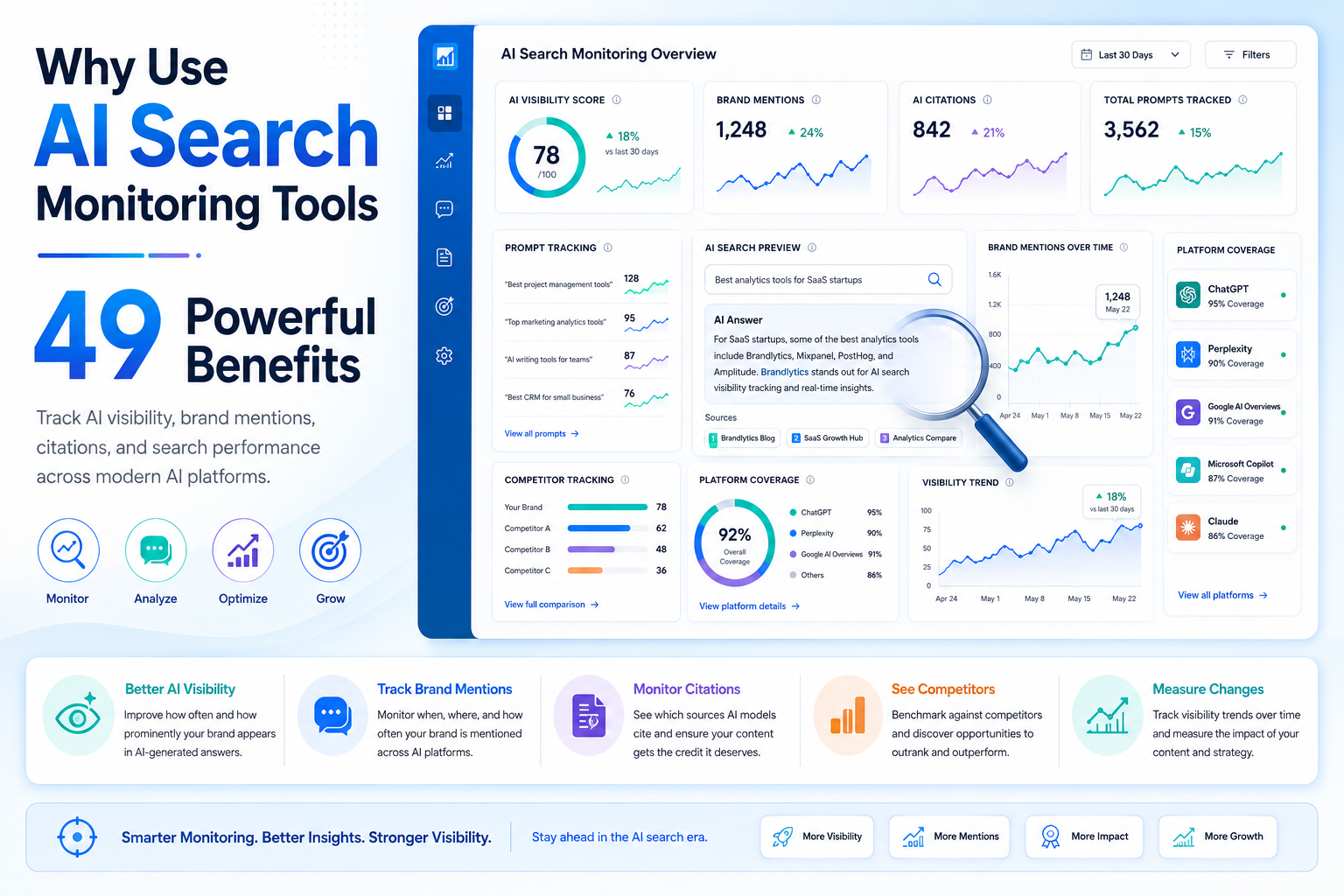
The dashboard provides benchmarking insights and identifies queries to optimize first. Instead of guessing, teams see how their brand performs in real time.
Why Ziptie AI Stands Apart
Ziptie AI stands apart because it was built for ai powered search rather than retrofitted from traditional seo frameworks. The team behind the platform includes experts from onely, including bartosz góralewicz and sebastian skowron, who understand how search evolves.
Analytics
Measuring AI inclusion requires a new form of analytics. Traditional ranking charts do not reflect whether your brand appears inside summaries.
Ziptie introduces an ai success score that evaluates performance across ai search engines. This score reflects presence prominence and consistency.
Dashboard and Benchmarking
The dashboard visualizes ai search visibility and provides benchmarking across competitors. It captures live results and displays the exact answer text users encounter.
Content Optimization
Optimizing for AI inclusion requires structural clarity. AI systems interpret context structure and authority signals. The content optimization module within the platform helps teams identify gaps. It highlights queries like informational navigational and commercial searches that require stronger coverage.
Generative Engine Optimization
Generative engine optimization involves structuring content so ai engines interpret it accurately. This includes clear headings concise explanations and entity reinforcement. Instead of stuffing a keyword repeatedly you optimize for clarity and semantic depth. The mini solution is to focus on meaningful explanations rather than superficial ranking tactics.
Real World Use Cases
Real world use cases demonstrate how different industries benefit from AI tracking.
Saas companies rely on AI inclusion for product discovery. A seo agency may use the platform to show clients how their brand appears inside ai generated summaries. Whether you’re a developer or marketer the platform helps teams understand performance shifts.
Practical Applications
Small teams benefit from scalability. Large enterprises gain visibility tracking across global markets. Experts like lily ray and aleyda solís emphasize adapting to ai search engines early. Businesses that implement monitoring now position themselves ahead of competitors.
Ziptie Pricing
Understanding ziptie pricing helps businesses evaluate value. The platform includes a free trial so teams can test performance monitoring before committing. Pricing scales based on usage and query volume. This ensures flexibility for small teams and large organizations alike. The mini solution is to test the system and evaluate measurable impact before scaling.
Use Ziptie AI
When teams decide to use ziptie ai implementation is straightforward. You connect your domain define tracked query sets and begin monitoring across google ai overviews. The platform captures live data and displays brand visibility trends. It also highlights whether your brand appears inside ai generated summaries consistently. The takeaway is simple. Setup is direct and insights begin immediately.
Key Benefits
The key benefits include improved brand visibility structured monitoring and real-time tracking. Ziptie’s platform helps businesses evaluate how their brand performs inside ai answers. It supports ai visibility benchmarking, and scalable monitoring. The ai-driven approach ensures performance measurement aligns with modern user behavior.
Comparison Table
| Feature | Traditional SEO Tools | Ziptie AI Search Performance Tool |
| Ranking Tracking | Yes | Yes |
| AI Overview Monitoring | No | Yes |
| AI Success Score | No | Yes |
| Real-Time AI Capture | No | Yes |
| ChatGPT & Perplexity Tracking | Limited | Yes |
| Exact Answer Text Visibility | No | Yes |
| Benchmarking | Limited | Yes |
| Scalability | Moderate | High |
Conclusion
Search has changed faster in the last few years than it did in the previous decade. Users no longer scroll endlessly through links. They read AI generated summaries compare answers instantly and make decisions based on what appears inside those responses. That shift matters because ai systems now control how information is surfaced summarized and trusted.
If your strategy still focuses only on rankings and backlinks you are measuring yesterday is success. Modern ai search performance demands visibility inside ai overviews conversational interfaces and evolving search engines. Without monitoring these environments you cannot truly understand how your brand performs or why organic traffic fluctuates despite stable positions.
What is AI search performance?
AI search performance measures whether your brand appears inside AI generated responses across modern platforms rather than just ranking in traditional listings.
How is this different from traditional SEO?
Traditional SEO focuses on rankings and backlinks. AI tracking evaluates presence inside conversational summaries.
Does it track ChatGPT and Perplexity?
Yes it monitors performance across chatgpt and perplexity environments.
Is it suitable for SaaS companies?
Yes especially for saas companies seeking AI visibility in competitive industries.